Breakdown of Michael Roberson’s Questions
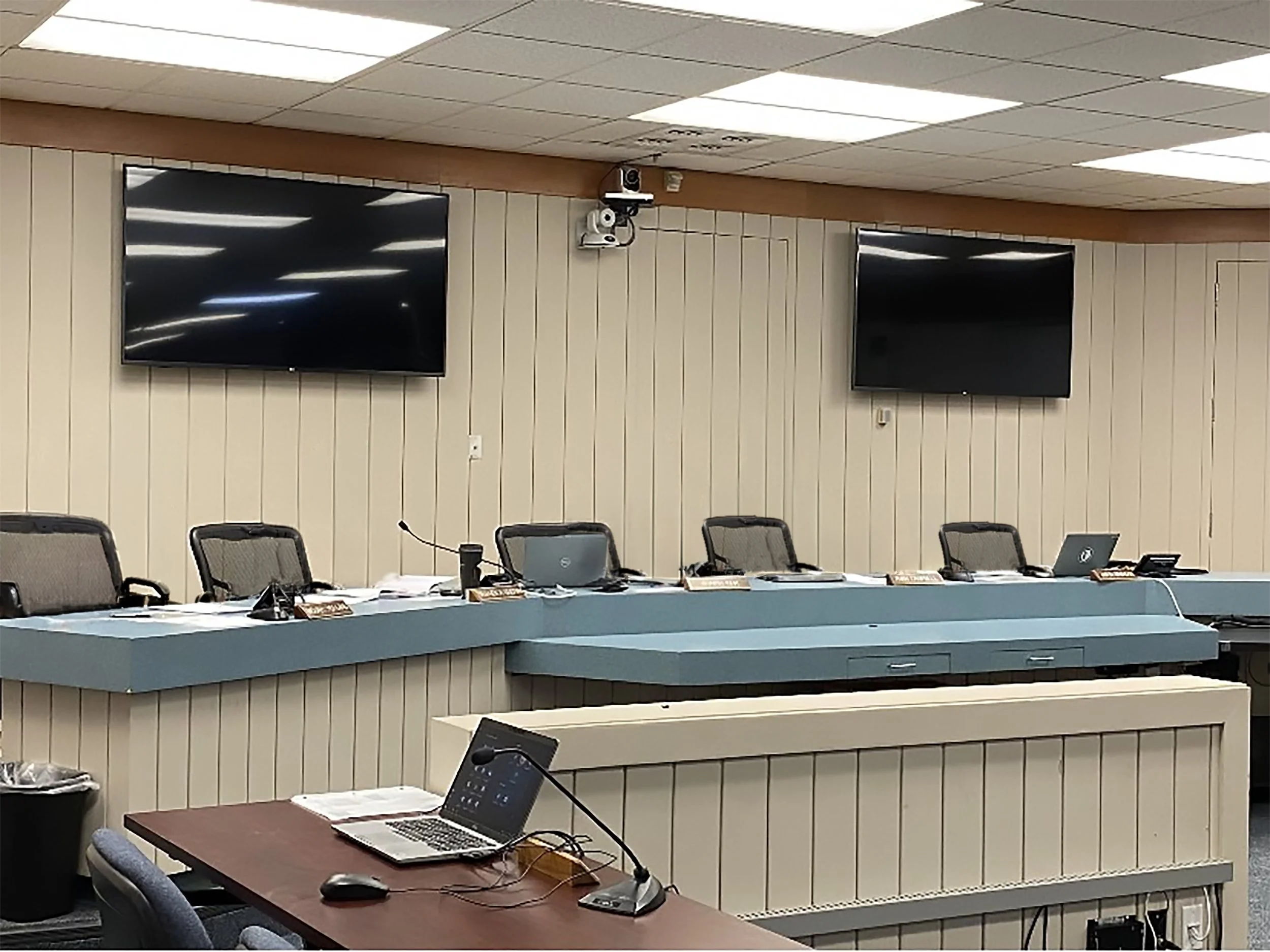
Michael Roberson is a former Tuolumne County employee with years of direct experience inside county government. During his time with the county, he worked in administrative and leadership roles that gave him firsthand knowledge of county operations, budgeting, staffing, grants, department structure, and how decisions move through the Board of Supervisors.
The questions below come from a Facebook post Michael recently shared publicly. In that post, he explained that he had emailed these questions directly to each member of the Tuolumne County Board of Supervisors and encouraged other residents to do the same. His stated goal was not to create online arguments, but to get clear answers to questions he believes have not been fully addressed in public meetings, candidate forums, or debates.
What makes this important is that these are not random political talking points. They are questions coming from someone who understands how county government works from the inside, and he is raising concerns in areas where many residents may not know the government terminology, the process, or the long term impact of these decisions.
1. Brown Act Violation
The question:
What exactly did the Board do that violated the Brown Act, who was involved, and has the Board asked for an investigation?
Plain English explanation:
The Brown Act is California’s open meeting law. It exists so elected boards cannot make decisions behind closed doors or discuss public business outside the public eye. The California Attorney General describes it as a public access law meant to protect the public’s right to attend and participate in local government decision making.
So when a Grand Jury says the Board failed to comply with the Brown Act, that is not a small technical issue. It means the public may have been left out of conversations or decisions they had a legal right to witness.
Why this matters:
If the Board truly believes in transparency, residents deserve to know what happened. Was it an improper closed session? A serial meeting? A discussion that should have happened in public? A Brown Act issue goes directly to trust. The question is not just, “Was the law broken?” It is, “Did the public lose its right to see how decisions were made?”
2. Mike Holland Investigation and County Oversight
The question:
If the DA said there was not enough evidence for criminal charges, did the Board still look into whether county policies were followed?
Plain English explanation:
There is a big difference between a criminal investigation and an administrative review. A DA has to prove a crime beyond a reasonable doubt. That is a very high bar. But county government can still ask different questions, such as:
Was county property used properly?
Were county rules followed?
Were permits required?
Did staff feel pressured?
Do county policies need to be tightened?
Why this matters:
A lack of criminal charges does not automatically mean nothing happened or that everything was handled correctly. It only means the DA did not believe a criminal case could be proven. Residents still deserve to know whether county rules, public assets, and public trust were protected.
3. Potential Conflict of Interest
The question:
If Supervisor Holland is a contractor who benefits from construction related approvals, should he step away from discussions that influence Community Development?
Plain English explanation:
The Community Development Department, often called CDD, handles planning, permits, inspections, building issues, and development related matters. A licensed contractor may have business interests that overlap with decisions made by that department.
This does not automatically mean someone has done anything wrong. But it does raise a fair question about influence.
Why this matters:
Even the appearance of conflict matters in public office. If a supervisor can influence policies, staffing, fees, enforcement priorities, or department direction, and that same supervisor’s private business may benefit from those decisions, the public deserves clear rules. Recusal protects both the public and the official.
4. Separation of Church and State
The question:
Is it appropriate for a supervisor to publicly rely on religious framing when making decisions for an entire county?
Plain English explanation:
Elected officials are allowed to have faith. They are allowed to talk about their values. The issue is not whether a supervisor is religious. The issue is whether public decisions are being made based on law, policy, facts, budget realities, and the needs of all residents.
A county includes Christians, non Christians, people of other faiths, and people with no religious beliefs. A supervisor represents all of them.
Why this matters:
When a supervisor repeatedly says things like “as a man of God” from the dais, some residents may reasonably wonder whether decisions are being made for the whole public or through one religious worldview. The Board needs to be clear that county government serves everyone equally.
5. Public Safety Spending and Data Transparency
The question:
What data proves that residents want the current spending priorities, especially for law enforcement, fire, and roads?
Plain English explanation:
Politicians often say, “The people want this.” Michael is asking, “How do you know?” Was there a scientific survey? A budget workshop? Public polling? A community needs assessment? Or is this just the opinion of the Board majority?
Why this matters:
Public safety is important. Roads are important. Fire protection is important. Law enforcement is important. But the public deserves to know how decisions are being made and what data is being used. If elected officials are going to say their budget reflects the will of the people, they should be able to show the evidence.
6. Priority Based Budgeting
The question:
If the Board says law enforcement, fire, and roads are the priorities, do the actual budget numbers prove that?
Plain English explanation:
The county’s recommended budget presentation states that the Board had about $67.99 million in discretionary general revenues for Fiscal Year 2025 to 2026. Those revenues are used for general operations, capital projects, some road funding, and debt.
Michael is pointing out that the Sheriff’s Office receives a much larger share than County Fire or Roads. His question is simple: if fire and roads are truly equal priorities, why do the numbers look so uneven?
Why this matters:
Budgets reveal values. Speeches say what leaders care about. Budgets show what they actually fund. If the Board calls something “priority based budgeting,” residents should ask what the priorities are, how they were ranked, and whether the final numbers match the public message.
7. Accountability of Elected Officials and Financial Impact
The question:
What has the Board done about delayed audits and the loss of grant funding?
Plain English explanation:
Some county officials are independently elected, which means the Board cannot simply manage them like regular department heads. This includes offices like the Auditor Controller, Sheriff, District Attorney, and others.
That creates a real accountability problem. If an elected official’s office falls behind, the Board may have limited direct authority. But the county as a whole still suffers the consequences.
Why this matters:
Audits are not just paperwork. They affect grants, reimbursements, credibility, and the county’s ability to receive outside funding. If delayed audits caused the county to lose millions in entitlement or grant funding, residents deserve to know what happened, what is being done, and how it will be prevented in the future.
8. Sheriff’s Authority and Departmental Control
The question:
Is it wise to move more departments under the Sheriff when the Board has limited control over elected officials?
Plain English explanation:
The current Sheriff is doing an excellent job. That is not really the question. The question is about structure.
Once a department is placed under the Sheriff, the Board has less direct day to day control. That matters for departments like Animal Control, OES, and possibly a Public Information Officer.
Recently the Board voted 3 to 1 to 1 to move OES from under the County Administrator’s Office to the Sheriff’s Office.
Why this matters:
Good government should not depend only on whether the current person in charge is good. It should be built to work long term. The next Sheriff may be excellent, or may not be. The question is whether the Board thought through future accountability before giving up direct administrative oversight.
9. CAO Leadership and Budget Oversight
The question:
If the CAO is expected to manage the budget, does the current CAO have the right background for that responsibility?
Plain English explanation:
The County Administrative Officer, or CAO, is supposed to be one of the most important operational leaders in county government. The CAO helps prepare the budget, manage departments, advise the Board, and oversee the overall organization.
Michael is questioning whether the current CAO has enough direct county administrative experience for that level of responsibility.
Why this matters:
A county budget is complicated. It includes general fund money, restricted funds, grants, state and federal rules, labor costs, pensions, capital projects, debt, public safety, roads, fire, health services, and more. If the Board wants the CAO to lead the budget, residents deserve confidence that the CAO has the experience to do it well.
10. Governance Structure and Board Expertise
The question:
Can the Board realistically manage department heads directly without a highly qualified CAO or CEO structure?
Plain English explanation:
Supervisors are elected representatives. They are not usually experts in every county department. They may come from business, public safety, education, construction, agriculture, nonprofits, or other backgrounds.
That is why many counties rely heavily on a professional CAO or CEO. That person provides day to day management and policy expertise while the Board sets direction.
Why this matters:
If department heads report more directly to the Board, then five elected officials may be supervising highly technical professionals without having the expertise to evaluate them properly. That can create confusion, politics, poor morale, and inconsistent direction.
11. Elimination of Grant Funded Leadership Role
The question:
When the county eliminated a long time employee who brought in millions in grants, what was the replacement plan?
Plain English explanation:
Grant funding is a major part of how small counties pay for big projects. Roads, facilities, emergency services, parks, infrastructure, and community programs often depend on outside funding.
If the county eliminates a position held by someone who was successful at securing grants, the obvious question is: who is doing that work now?
Why this matters:
Cutting a salary can look like savings on paper. But if that person was bringing in millions of dollars, eliminating the position could cost the county far more than it saves. Residents deserve to know whether the Board had a plan or simply removed capacity.
12. Washington Street Courthouse Renovation
The question:
Is the courthouse project happening, and is it following public contracting laws?
Plain English explanation:
Public construction projects have rules. They usually involve procurement requirements, bidding rules, contracts, documentation, prevailing wage laws, and conflict of interest protections.
Michael is asking whether those rules are being followed.
Why this matters:
Government construction projects use public money and public property. Residents deserve assurance that no one is getting special treatment, that the process is legal, and that the county is protected from future liability.
13. Dual Roles and Potential Conflicts of Time and Responsibility
The question:
Can Supervisor Kirk fully perform both his state job and his elected county supervisor role?
Plain English explanation:
This is not only about whether someone is allowed to hold two jobs. It is about whether both publicly funded roles are being performed fully and transparently.
The questions are practical:
Does one job interfere with the other?
Does his state job allow schedule flexibility?
Is that flexibility documented?
Does his supervisor know?
Can he attend meetings, prepare properly, meet with constituents, and respond to county issues without conflict?
Why this matters:
A supervisor position is not just showing up for Board meetings. It involves reading staff reports, meeting with residents, attending committees, responding during emergencies, studying budgets, and being available. Residents have a right to know whether their elected representative has the time and permission to do the job fully.
14. Grand Jury
The question:
If the Grand Jury is investigating current supervisors, should the findings come out before the election?
Plain English explanation:
The Civil Grand Jury investigates local government and issues reports with findings and recommendations. Michael is asking whether voters should have access to those findings before they cast ballots.
Why this matters:
Voters make better decisions when they have more information. If a Grand Jury report contains serious findings about current officeholders, releasing it before an election could be important for public awareness. At the same time, Grand Jury processes have legal rules, so this question is also about timing, fairness, and transparency.
15. Station 56 CAO Presentation and Recommendation
The question:
If Station 56 could have been funded through small cuts elsewhere, why did the Board choose to eliminate funding instead?
Plain English explanation:
Station 56 has become a major public trust issue because it involves fire protection, response times, and community safety. Michael is questioning whether the “budget crisis” was truly unavoidable.
He is saying that if every department took a small enough cut, the fire staffing could have remained funded.
Why this matters:
This goes back to priorities. If fire is a top priority, residents need to understand why the Board did not spread the burden across the budget to preserve fire services. The issue is not just money. It is whether the Board explored all reasonable options before cutting public safety.
16. Office of Emergency Services Move to the Sheriff
The question:
Did the Board do enough homework before moving OES under the Sheriff?
Plain English explanation:
OES, the Office of Emergency Services, coordinates emergency planning and disaster response. In a county with wildfire risk, winter storms, road closures, power outages, extreme weather, and evacuation concerns, OES is not a side issue. It is central to public safety.
Michael raises several process questions:
Was the county ordinance changed before the department structure changed?
Did County Counsel approve the order of operations?
What will it cost under the Sheriff compared to the CAO?
What is the new organizational chart?
Who reports to whom?
Were job descriptions updated?
How will the workflow function?
If the concern was politics, why is the Sheriff’s Office considered less political when the Sheriff is also an elected official?
Why this matters:
Emergency management should be clear before a crisis happens. Residents need to know who is in charge, how decisions are made, what it costs, and whether the change improves response or simply shifts authority.
17. Workplace Culture
The question:
Is county staff morale actually healthy, or are employees afraid and frustrated?
Plain English explanation:
Michael lists several warning signs: long time employees leaving, positions eliminated without public acknowledgement, CAO resignation, County Counsel resigning, the Chief Building Official resigning, and the sudden resignation of the OES Assistant Director.
One resignation may be normal. Several major resignations and eliminations close together can suggest a deeper workplace problem.
Why this matters:
County government depends on experienced staff. When institutional knowledge walks out the door, services suffer. Permits slow down. Grants are missed. Contracts get messy. Emergency planning weakens. Legal risk increases. Morale drops.
Residents may not see the internal damage right away, but they eventually feel it through slower service, poor communication, missed funding, and weaker public programs.
The Bigger Point
Michael’s questions are not just about one supervisor, one department, or one decision. They are about whether Tuolumne County is being governed with transparency, accountability, professional management, clear legal process, responsible budgeting, respect for staff, long term planning, and public trust.
These are fair questions for any Board of Supervisors. If the Board has good answers, they should welcome the opportunity to give them clearly and publicly. If they cannot answer them, that tells us all something too.